My Child Cries When I Leave for Preschool
– Is It Normal?
Understanding separation anxiety in young children and discovering gentle, effective strategies to create peaceful, tear-free preschool drop-offs in Valasaravakkam, Alwarthirunagar, and Porur.
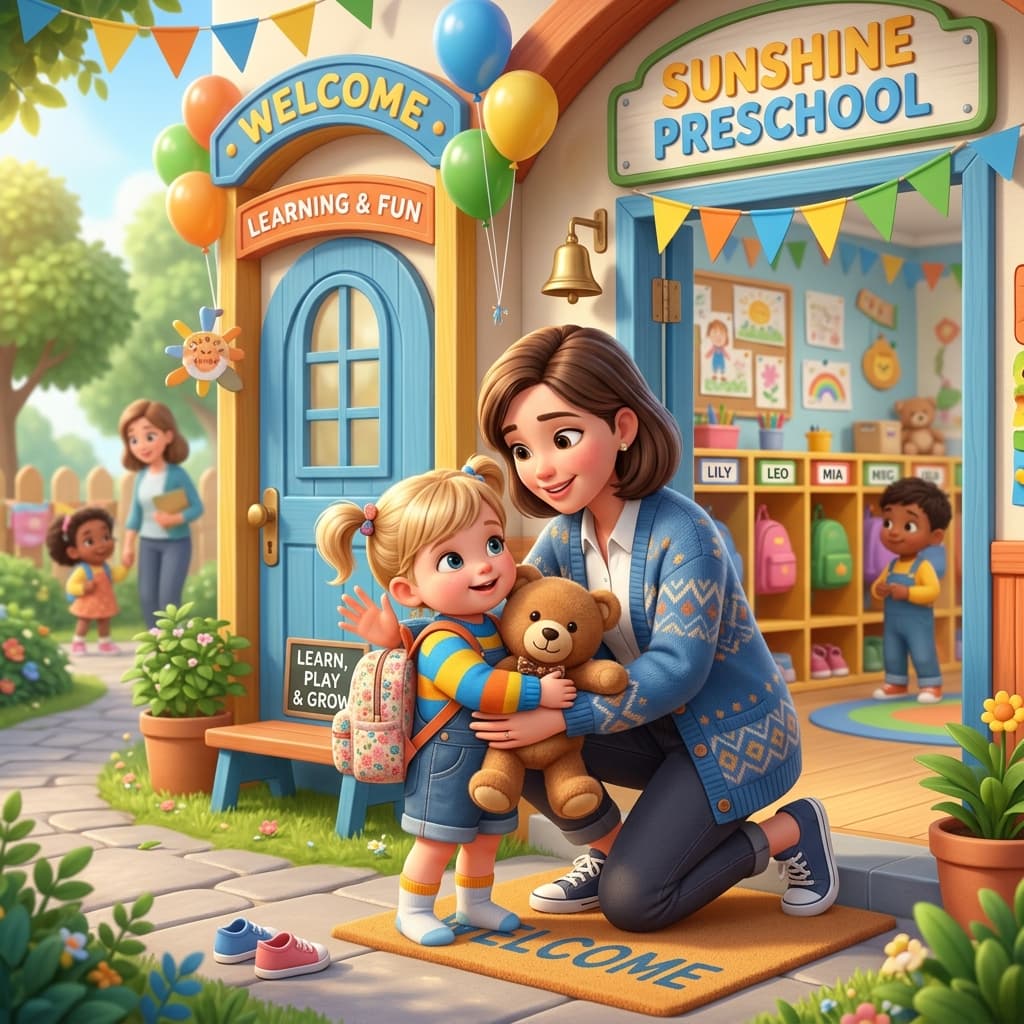

Is It Normal? (Yes, and Here's Why)
You've packed their tiny backpack, prepared a healthy snack, and walked up to the preschool gates with high hopes. But the moment you turn to leave, your child clings to your leg, tears welling up, letting out a heart-wrenching sob.
If this sounds familiar, you are not alone. Separation anxiety is a completely normal, healthy, and expected part of child development.
Between the ages of 12 months and 3 years, children develop a deep understanding of attachment. When they cry at drop-off, it isn't a sign that they aren't ready for school, nor does it mean you are doing something wrong. It is simply their way of expressing: "You are my safe harbor, and I will miss you."
6 Gentle Strategies for Easier Drop-Offs
Transitioning to preschool is a team effort between parents and teachers. Here are six practical, expert-backed strategies to help ease separation tears and build confidence.
Create a Short, Sweet Goodbye Ritual
Consistency breeds comfort. Establish a quick, predictable routine like a special handshake, a pocket hug, or a signature phrase ('I love you, see you after snack time!'). Once the ritual is complete, leave promptly. Prolonging the exit only stretches the emotional peak for your child.
Never Sneak Away
It is incredibly tempting to slip out of the classroom when your child is distracted. However, this damages trust. When they realize you are suddenly gone, it triggers panic and can significantly worsen drop-off anxiety the next morning. Always say goodbye, even if it brings temporary tears.
Be Precise About Your Return
Toddlers don't understand clock time, but they understand routines. Instead of saying 'I will be back at 12:30 PM,' frame it around school milestones. Say: 'I will be here to pick you up right after your afternoon snack' or 'right after storytime.' This gives them a tangible anchor to look forward to.
Project Confidence and Calm
Children are emotional mirrors. If you feel guilty, anxious, or tearful at drop-off, your child will detect those micro-signals and conclude that the classroom must be an unsafe place. Take a deep breath, keep a bright smile, and project absolute confidence that they will have a wonderful day.
Practice Separation in Small Steps
If your child has spent very little time away from you, build up their tolerance. Start by leaving them with a relative, a trusted neighbor, or a babysitter for 30 minutes, then an hour, gradually extending the duration. This teaches them a crucial lesson: 'Mama/Papa leaves, but they always return.'
Validate Their Feelings
Avoid dismissing their fears with statements like 'Don't cry' or 'You're a big kid now.' Instead, validate their emotions: 'I know it's hard to say goodbye, and it is okay to feel sad. I will miss you too, but I know you are going to have a fun day with your friends and teachers!'
How We Support Transitions in Valasaravakkam
At Qurious Lil'Mindz, our experienced educators are trained specifically to handle separation anxiety with absolute love, patience, and professional expertise. Here is how we ensure a smooth transition:
One-on-One Warm Welcomes
Every child is greeted individually by a familiar teacher. We steer their focus immediately to a high-interest sensory table or fun toy to gently ease them into the classroom group.
Predictable & Engaging Class Routines
We use visual schedule boards so children know exactly what to expect. This structure eliminates uncertainty, which is a major contributor to anxiety in early childhood.
Transparent Parent Communication
We know parents experience separation anxiety, too! Our staff shares quick updates and comforting photos once your child settles in, helping you stay connected and reassured throughout the day.
The Best Support System for Parents in Chennai
Transitioning to school is a big milestone, but it doesn't have to be a stressful one. As the best playschool in Valasaravakkam and a trusted choice for parents in Porur and Alwarthirunagar, Qurious Lil'Mindz is dedicated to making every child's first step into school a positive, safe, and happy experience.